Critical Thinking is AI’s Kryptonite

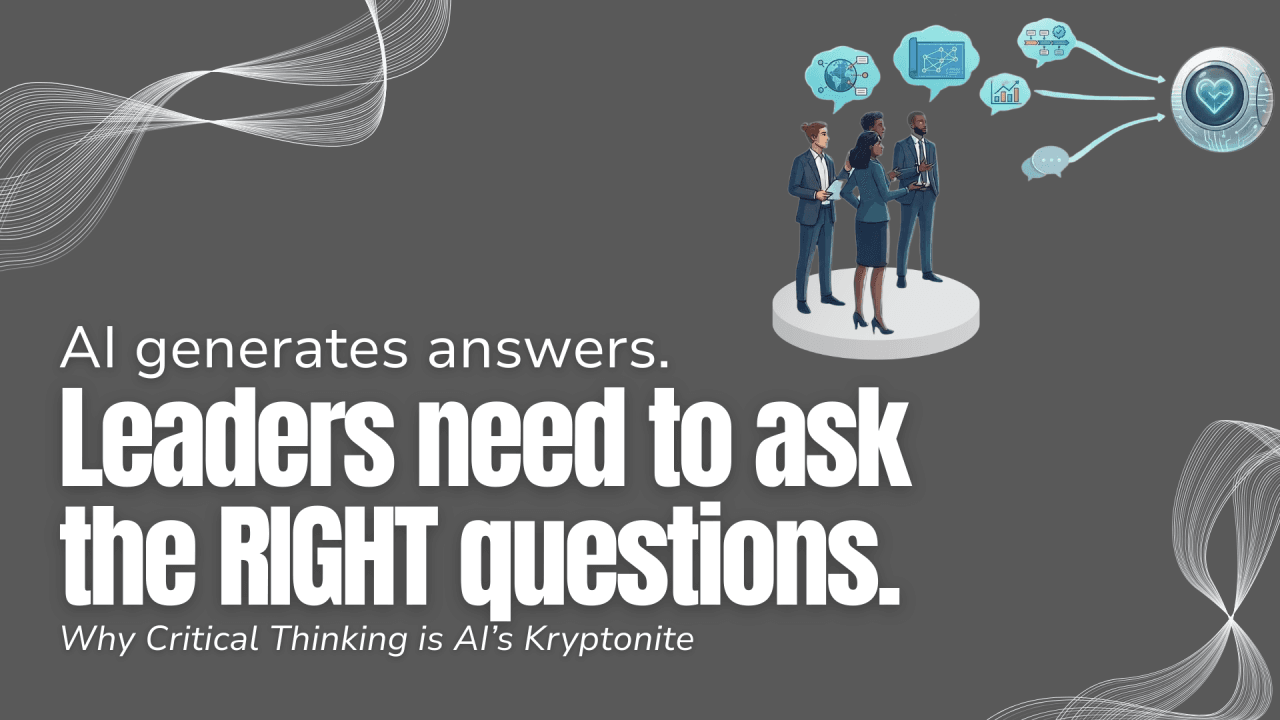
Grey background with small image of 4 people sharing information with AI. Text reads: AI Generates Answers. Leaders need to ask the RIGHT questions. Subtext: Why Critical Thinking is AI's Kryptonite

Generative AI is commoditizing information. Discover why critical thinking, empathy, and context are the ultimate future-proof skills.

At a recent Women of MENA in Technology panel in Toronto, one comment from a tech leader stopped the room:

“It’s not a knowledge economy anymore. It’s about asking the right question.”

For decades, we operated in a knowledge economy. Your professional value was directly tied to how much information you could retain, process, and strategically hoard. But with the rapid integration of Generative AI across enterprise organizations, the rules of the game have fundamentally changed.

At the Women of MENA in Technology panel hosted at Deloitte Toronto, a recurring theme emerged among enterprise leaders from SAP, CIBC, Jerry AI, and DataBahn: Generative AI has turned raw knowledge into a commodity. The future belongs to those who know how to think critically, ask the right questions, and apply human context to machine-generated answers.

The End of the Information Advantage

When every employee has access to tools trained on humanity's collective knowledge, simply knowing the answer is no longer a competitive differentiator.

"It's not a knowledge economy anymore," noted Dina Kamal, Field CTO at DataBahn. "It's more around asking the right question. And having the thoughtfulness to assess the answer, to validate the answer... We say we're outsourcing our brain, but you have to understand what critical thinking means."

This shift requires a massive unlearning for modern professionals. Instead of being the ultimate source of information, workers must transition into the role of editors, validators, and strategists.

The Data Backs It Up: Human-in-the-Loop is Non-Negotiable

This isn't just panel rhetoric; it is a macroeconomic reality validated by global research. As AI systems take over routine coding, data analysis, and content generation, the premium on human judgment is skyrocketing.

  • The World Economic Forum (WEF): According to the WEF’s Future of Jobs Report 2023, the top two skills identified as most important for workers today are analytical thinking and creative thinking.
  • Deloitte’s AI Imperative: Deloitte's ongoing research into enterprise AI adoption continually emphasizes that the most successful, high-ROI implementations rely on "human-in-the-loop" systems. AI can generate the output, but human contextual judgment must override and guide the final application.

Neima Shahidy of Jerry AI perfectly encapsulated this risk of blind reliance on technology during the panel:

"AI amplifies good and bad judgment. In the absence of good judgment, you can have a team sprint towards flawlessly executing a solution no one ever needed... don't outsource the thinking."

Empathy and Ingenuity: The Human Moat

If AI is the engine, human empathy and lived experience are the steering wheel. Generative models struggle with cultural nuances, emotional intelligence, and complex, multi-stakeholder human dynamics.

This is where purpose-driven leadership steps in. Hiba Abdou, Partner at Deloitte, framed this beautifully when discussing the disruptive, daunting nature of the AI era:

"What will set leaders apart in this era isn't just technological know-how. It's initiative, it's empathy, it's ingenuity. Or in other words: brains, heart, and courage."

The Takeaway for Purpose-Driven Brands

At Innovate By Day, we know that technology alone doesn't capture hearts or drive corporate goodwill—stories do. As we navigate the death of the knowledge economy, organizations must invest heavily in upskilling their teams not just in using prompt interfaces, but in applying critical thinking, empathy, and narrative strategy to their outputs.

We have the tools to build faster than ever before. The organizations that will thrive in the AI era won’t be the ones producing the most information. They will be the ones asking the best questions.

Now, our greatest responsibility is deciding exactly what is worth building.


Related Posts