Accessibility Isn’t an Add-On: The Importance of an Inclusive Digital Strategy
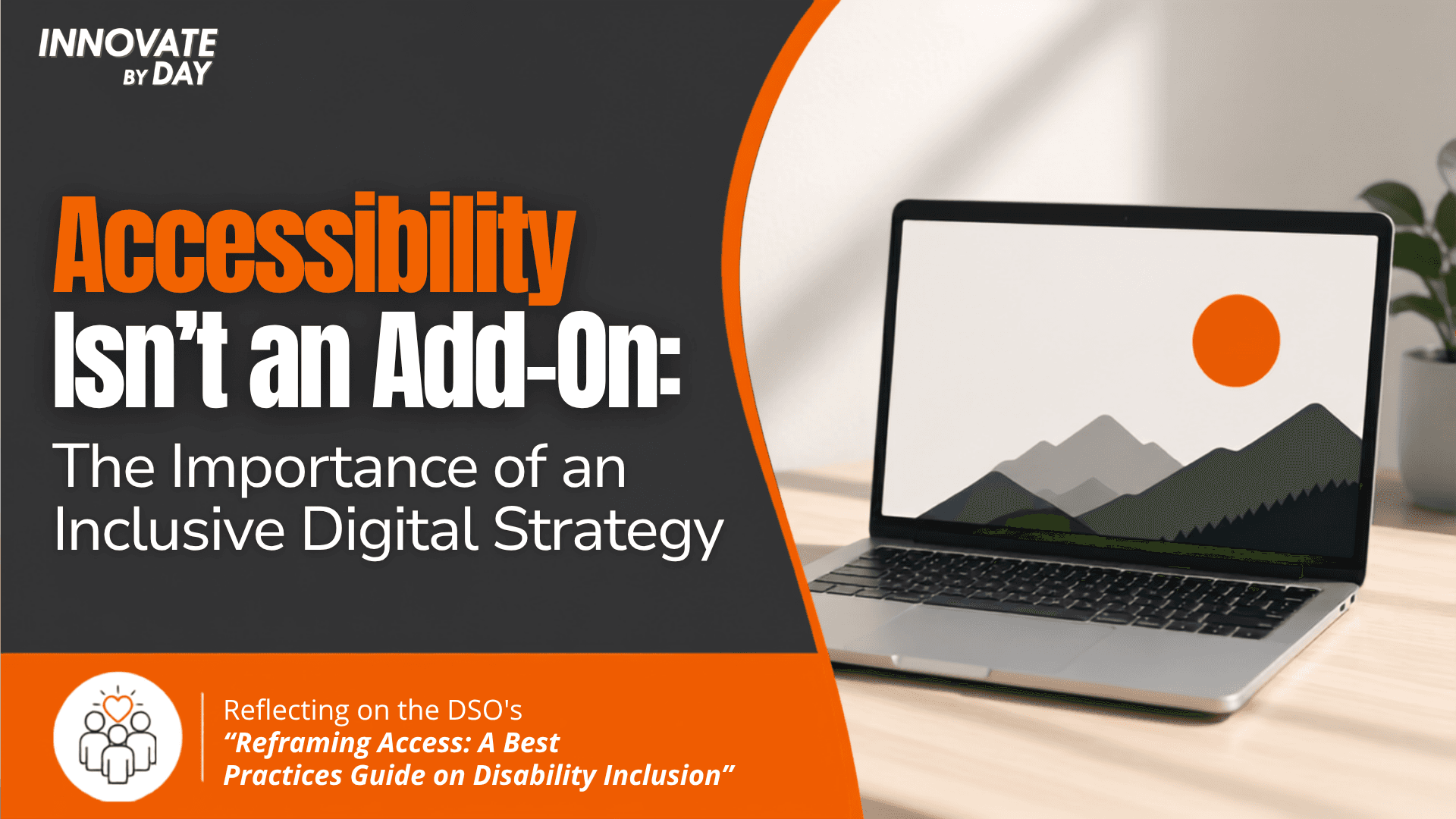
A laptop displaying a minimalist mountain landscape with an orange sun. Text to the left reads, "Accessibility Isn't an Add-On: The Importance of an Inclusive Digital Strategy". Innovate By Day logo in top left corner.

Reflecting on Reframing Access, we explore how accessibility and inclusive experiences reduce barriers, strengthen trust, and support meaningful participation.

Accessibility is strongest when it's built in early.

That message came through clearly in the Disability Screen Office’s Reframing Access: A Best Practices Guide on Disability Inclusion in Canada’s Screen Industry, a practical resource created to help screen industry professionals build accessibility into development, hiring, production, on-set practices, post-production, and accommodations.

While the guide is specific to Canada’s screen industry, its core message applies to any organization creating experiences people need to access, navigate, and trust. Accessibility is not a final check. It belongs in the planning, workflow, communication, and experience from the start.

Accessibility shapes more than compliance; it shapes whether people can understand your message, navigate your systems, participate in your work and trust the experience you're creating.

Why Reframing Access is Important

The Disability Screen Office’s guide is rooted in research on the participation of people with disabilities in Canada’s screen industry and the barriers they face in working or accessing work opportunities. 

The guide notes that: 

44% of respondents said that their disability had been a barrier to getting a job in the industry. 

41% said disability had affected opportunities for career growth and advancement.

28% said it had affected job retention or access to consecutive hiring opportunities.

These numbers point to systems, processes, and assumptions that can determine who gets to participate and who’s left working around barriers.

The guide also clarifies that accommodating accessibility needs isn't one single action. Accessibility requirements can show up in areas such as budgeting, scheduling, hiring, onboarding, communication, physical spaces, assistive technology, accommodations, and the way people are invited into a process.

That’s what makes the resource so valuable. It moves accessibility out of the abstract and into the practical, asking teams to consider what access looks like in practice before the work begins

Accessibility Belongs in the Planning

One of the strongest ideas in Reframing Access is that access needs to be considered at the start of a project.

In the screen industry, that might mean considering accessibility throughout development, creative ideation, financing, pre-production, production planning, casting, crewing, scheduling, locations, and post-production. The guide states that accessibility should be embedded from the outset of development and creative ideation, shaping decisions such as team composition and production planning.

That same principle applies to digital presence and communications.

Before a campaign launches, before a page goes live, before a form is published, before a video is shared, and before an event is promoted, there is an opportunity to ask:

  • Can people understand this?
  • Can people navigate it?
  • Can people access the information in more than one way?
  • Can people take the next step without unnecessary friction?

When those questions are asked early, accessibility becomes part of the foundational structure of what you’re developing or creating. 

Access & Trust are Connected

Your audience can feel the difference between an experience that was designed with them in mind and one that requires them to work harder than they should.


A confusing form, missing captions, unclear navigation, low-contrast design, inaccessible documents, or vague calls to action may seem like small details from the inside. But to the person trying to access the information, those details shape whether the experience feels usable, welcoming, and trustworthy.


That is why accessibility and digital presence are so closely connected.


Your digital presence is the full path someone moves through when learning about your work, evaluating your credibility, or deciding whether to take the next step.


Accessibility makes that path clearer, more usable, and more trustworthy. It helps people find what they need, understand what matters, and move forward with confidence.

From Visibility to Meaningful Access

A campaign can drive attention, a website can attract visitors, a social post can reach people, and a grant-funded ad campaign can increase search visibility.

But visibility is not the same as access.

If someone lands on a page and cannot understand the message, navigate the next step, access the content, or complete the action, the opportunity is lost.

This is where accessibility becomes part of strategy.

It’s connected to how people experience your organization. It affects whether your message is clear, whether your pathways make sense, whether your audience feels considered, and whether people can participate as you intended.

At Innovate By Day, this connects deeply to how we think about digital presence, trust, and meaningful action.

It’s not enough to bring people to the door. The experience needs to help them understand why they’re there and what matters, and to look forward to the next step they can take.

What Organizations Can Ask Earlier

Accessibility doesn’t have to begin with a massive overhaul. It can begin with asking better questions. For example, before launching a campaign, publishing a page, sharing a video, or promoting an event, ask:

  1. Is the message clear?
  2. Is the next step easy to find?
  3. Can people access the content in different ways?
  4. Are captions, alt text, transcripts, or plain-language summaries needed?
  5. Is the design readable and easy to navigate?
  6. Are forms simple to complete?
  7. Have we built in enough time to respond to access needs thoughtfully?

The goal is not perfection. It is building access into the decisions, systems, and touchpoints that shape how people experience your organization.

Final Thought: Build Access In From the Start

Reframing Access is an important resource because it offers more than a statement of values. It provides practical guidance for changing how work gets planned, resourced, communicated, and experienced.

Accessibility is part of how strategy becomes real for the individuals trying to participate. When it’s built in from the start, they don’t have to work as hard to understand, engage, or take action. The experience becomes clearer. The path becomes easier to follow. The organization becomes easier to trust.

Access is not the final step. It’s part of the foundation.

If your digital presence, campaign, or online experience might be making people work harder than they should, it may be time to take a closer look. At Innovate By Day, we help organizations clarify their message, strengthen their digital presence, and create inclusive experiences that build trust and meaningful action. Explore our services or contact us to start the conversation.


Related Posts